Thinking about buying or insuring a boat in Preveza Greece??

Monday, 14 January 2013

Broads volunteers needed for Breydon

A new opportunity has arisen for local people to help look after the remote and wildlife rich areas of Breydon Water and Haddiscoe Island.


The Broads Authority wants to recruit half a dozen volunteers to support its rangers in patrolling the Breydon area both on land and water. They will be involved in patrolling the waterways, carrying out minor maintenance work, mowing and brush cutting, assisting the public, and helping with emergencies, events, educational activities and small conservation projects.

In return for necessary training the Ranger Volunteers will be expected to offer a minimum of two days assistance a month throughout the year. The work will be based at Great Yarmouth Yacht Station, Tar Works Road.

They will be joining an army of 150 highly valued volunteers who help the Broads Authority achieve its goals in maintaining and conserving the Broads.

This opportunity has arisen since the Broads Authority took over the management of Breydon Water and the Lower Bure from Great Yarmouth Port Authority last June. Since then the Authority has begun a programme of work to improve safety for boaters and is carrying out year round patrolling.

The role description and the link to the online application process are available on http://www.broads-authority.gov.uk/authority/volunteer/volunteer-vacancies.

If you would like to speak to a ranger about the role before you apply you can contact the Breydon Rangers -- Steve Williams on 07768 086399 or Kye Rodriguez on 07733 123883.

Applications should be submitted via the Broads Authority volunteer vacancy web page by Friday 1st February. Interviews will be held on Saturday 9th February at the Priory Centre, Priory Plain, Great Yarmouth, NR30 1NW.

Broom 29

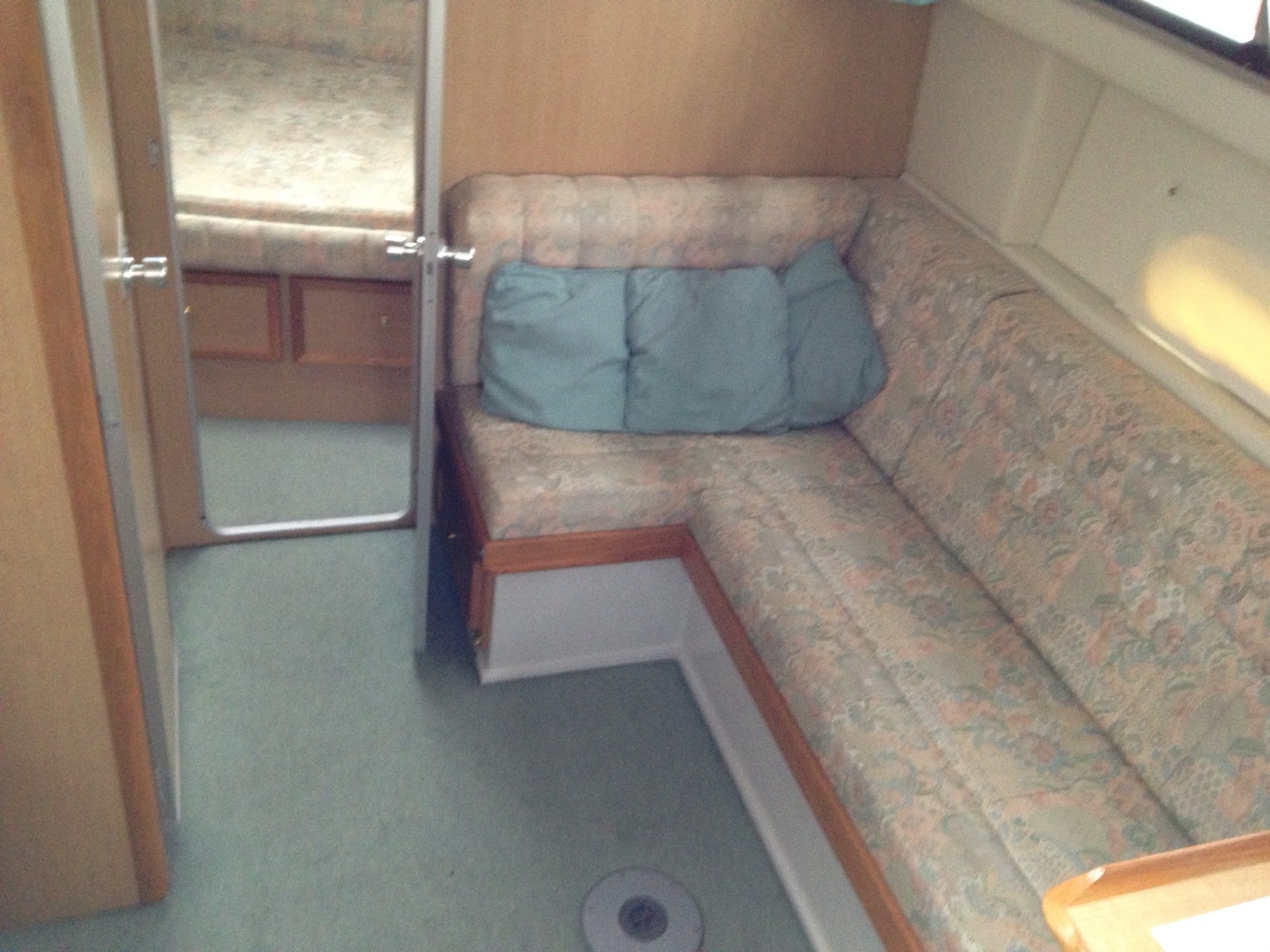
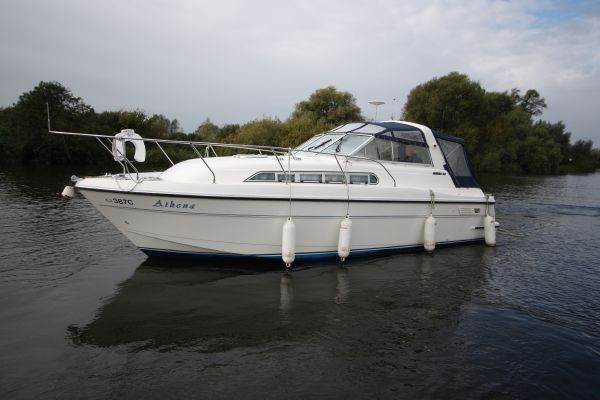
Today’s job was at Broom Boats in Brundall carrying out a Pre-purchase Survey o this Broom 29 built in 1996. This semi displacement Andrew Worlstenholme designed river cruiser came in 2 forms either hard top with wheelhouse or as this example full cockpit and folding hood. The spacious open plan interior offers 4 berths within the cabin with features such as hot water, heating, bow thruster, shower and fridge.


She is the baby of the Broom range, the 29 is a medium powered displacement cruiser designed mainly as a river boat but with a capacity for estuary cruising. They are popular on the Broads as well as other river systems with restricted air draught.

The compact accommodation provides a double cabin forward as well as an occasional single berth in the saloon sofa. The roomy aft cockpit doubles up as living space with the provision of a good quality canopy.

The standard single engine for the 29 ST is a 35HP 4.150HE Nanni diesel, see pic below, although larger engines up to 62HP are also possible.


Surveyors comments: Great access on this model for inspection. There’s a second access trap on the cockpit floor which alows you to see behind all the tankage, steering gear, and all the other equipment. Good Aquafibre hull, strong and thick. Maybe slightly under powered for estuary work but quite capable for Broads use. Might be worth choosing your tides for crossing Brayden Water.

Thursday, 10 January 2013

Boats of the week


Next weeks bookings are rolling in nicely....


Right up my street!...Private Survey for Insurance- plus a BSS test. The Dragon was designed by Norwegian Johan Anker in 1929. Reminds me of a Brown Boat here on the Broads...
Pre-purchase Survey at Broom Boats. A nice looking example of the popular Broom 29.
The most popular design on the Broads. A pre-purchase Survey on this Bermuda 34 for Boatshed Norfolk.com
Thinking of Buying a Boat and Need Help? Call Insight Marine Surveys Ltd. I specialise in Boats of all types, and I will assist you to make an informed decision. Contact me for a detailed and comprehensive report at: steventruss1@aol.com


Bavaria 40

I had trip down to Bradwell on Sea in Essex yesterday to Survey this 42 foot Yacht. The Bavaria 40 /42C3 is from Germany’s largest production sailboat builder, Bavaria Yachtbau GmbH. The company builds a complete line of J&J-designed, performance cruisers from 31 to 50 feet and three center-cockpit blue water designs, including the Ocean 40, not to be confused with the aft-cockpit Bavaria 40.


Bradwel Marina in Essex
The sacrifical anode was replaced while the vessel was out of the water......

The reason for Bavaria’s success in the marketplace is value. A new, well-equipped 40-footer delivered UK will cost less than £130, 000. And this is for a high-quality, nicely appointed boat that sails beautifully. The value becomes readily apparent as you stroll around a major boat show like London 2013 and pit the Bavaria 40 against its competitors. How do they do it? By marrying an old-fashioned economic principle with state-of-the-art technology.

While many sailboat manufacturers are limiting production and charging more for boats built to order, Bavaria is taking another tack by churning out boats and keeping prices low. The company has invested in computer-aided manufacturing equipment that has streamlined the production process. Bavaria employs special tools for cutting not only the interior wood sections (other builders do this as well), but also for edge trimming and finish cutouts on the deck. This process reduces man-hours per boat significantly, and the company passes the savings on to the consumer.

Surveyors comments: The Bavaria combines excellent German engineering, versatile sailing characteristics and comfortable accommodations in an affordable package.

Tuesday, 8 January 2013

Haines 320 AC

Yesterdays assignment was at Norfolk Yacht Agency in Brundall on the Southern Broads. They operate from two sites on the Norfolk Broads - Brundall and Horning - each with efficient sales offices and capacity for 60 boats. Their Brundall Service Centre where I was yesterday is equipped to lift, service, repair and maintain boats of all shapes and sizes. See more


This is a very popular model for inland waters and is yet another Motor Boats Monthly award winner for Haines. The 320 offers accommodation for 6 in two private ensuite cabins and the saloon. Great upper deck steering position with folding screen option.

Surveyors comments:
Its really nice to see that all the hand-crafted furniture (each piece is bespoke) is made for the individual boat. The Avonite composite worktops in the galley are very flashy on this example and are also manufactured in-house, along with the production of all GRP components. You have to admire the quality.

Thinking of Buying a Boat and Need Help? Call Insight Marine Surveys Ltd. I specialise in Boats of all types, and I will assist you to make an informed decision. Contact me for a detailed and comprehensive report at:
steventruss1@aol.com

Saturday, 5 January 2013

Great start to 2013

What a great start to 2013... Four surveys have been booked and confirmed this week which is very encouraging for this time of year. Hopefully signs of a good things to come.....

Haines 320 at Norfolk Yacht Agency Brundall
Bavaria 40 with Boatshed
Freeman 32 MkII with Norfolk Yacht Agency Horning
Private- 34' Felling 346 Brancaster
Thinking of Buying a Boat and Need Help? Call Insight Marine Surveys Ltd. I specialise in Boats of all types, and I will assist you to make an informed decision. Contact me for a detailed and comprehensive report at: steventruss1@aol.com

Worn cutless bearings

Another propeller shaft out of line on this boat today… judging by the large gap at the bottom, this bearing looks like it is worn. Actually it is quite new but the shaft is badly misaligned with the strut.


How to Check Your System
 
The first thing to do is to check the engine mounts. If they are the vertical stud type set in a rubber base, these are the kind that are prone to rocking back and fourth. Check the stud to make sure that its centered in the base with the vessel at rest. If its leaning in any direction, the mount is stressed and the system is out of alignment .

Conduct a back down test. One engine at a time, start from neutral, put the engine in gear and accelerate hard, up to no more than 1/3 throttle. Repeat this process in reverse, all the while watching the mounts for movement. If the engine and mount are moving more than 1/8" in any direction, your mounts are not doing their job of holding the engine in place.

Observe the shafts while running at two speeds, idle and cruise. Observation of shaft runout will only prove the negative; out of line shafts can appear to run true even though out of line. On the other hand, a badly wobbling shaft means something's wrong. Runout up 1/8" is acceptable at idle speeds but not at cruise. If shaft wobble is visible over 1200 RPM, suspect a problem. Again, that's because rotating shafts tend toward self-centering. At high speed even bent shafts can straighten out and show no sign of trouble. If the shaft is observably causing the transmission to move, or you can feel the movement by putting your hand on it, then there's definitely a problem.

Many boat yards think that the way to check shaft alignment is to disconnect the coupling and check the flange clearance with a feeler gauge. That's only part of the story. Before doing this, with the vessel hauled, check the position of the shafts relative to the bearings. Cutless bearings that are worn more on one side than another are a positive indicator that something is out of alignment. Heavy shafts of 1.5" or more will naturally compress the rubber bearing on the bottom side, but not so much that there's an obvious gap at the top.

Next, check the shaft-to-bearing alignment at both the front and back ends of the bearing. If the shaft is off-centered, either to one side, top or bottom at one end, but is off-centered to the opposite side at the other end, then the shaft is not parallel with the bearing bore. It is either up or down, or off to one side. In this case, the whole system should be suspect, at which point the entire system alignment must be redone, including setting up target wire to make sure that the struts themselves are properly aligned.

Now check how the shaft is centered with the opening in the stuffing box flange. If there is little clearance (shaft in the opening), it should be exactly centered; if a lot of clearance, it can be off a little without causing harm.

Monday, 31 December 2012

Happy Newyear 2013

Wishing everyone a happy, healthy and prosperous 2013.... and enjoy every experience...


Thursday, 27 December 2012

Buying a boat in 2013

Buying a boat 2013?
Whatever the type of boat you are buying, be it a dinghy or a super yacht, the same general rules apply. Follow these principles and you can buy your boat with confidence.


Dont forget this years show... the perfect start place if your thinking of buying this year
New or used?
After you've decided what type of boat to buy, the next step is to decide whether you want to buy a new or used boat. Buying a new boat from a dealer will avoid many of the difficulties that are associated with buying a used boat. For example, new boats will come with a warranty and you'll have more confidence that the boat you are buying has not previously been stolen. The down-sides to buying a new boat, however are that the initial cost is much higher, the value will depreciate rapidly and new boats are generally less well equipped than used boats. Take a look at Haines Marine …one of the local boat builders to the Norfolk Broads, and see their latest models:

http://www.nya.co.uk/14_new-haines-range.html

Buying a used boat
If you'd prefer to save some money and buy a boat whose value will not drop so sharply, then buying a used boat is the sensible choice to make. The rest of this article is devoted to tips on buying used boats.

Specialists in used boats from Haines
Haines on the Broads have a unique depth of knowledge about the current range and earlier models. They have known many of their boats since before they were launched.

The quality of build ensures that Haines cruisers give many years of enjoyment. A used model is an excellent introduction to the brand and makes a good first boat for customers wanting to get into cruising. Not many people want to part with a Haines so used models can be difficult to find. However we know where they are and are best placed to find the boat that you want. The popularity of Haines means that we are always in the market for used models.

If you are buying a used boat from a private seller, it will generally come with no warranty, so you need to check it out carefully to avoid making an expensive mistake. Many brokers and dealers sell used boats as well as new, and may offer a limited warranty. Whilst this may provide some peace of mind, the broker/dealer needs to make a commission on the sale and this will be reflected in a higher price than if the boat was being sold privately.

Stock BoatsThese are becoming increasingly popular and are well worth thinking about. Check out Norfolk Yacht Agency on the Norfolk Broads they have a large selection of stock boats for the 2013 season.

http://www.nya.co.uk/76_Stock%20boat%20warranty.html

These boats have been pre- inspected and tested by qualified Marine Engineers who work for the company. All items of equipment will work at time of handover (unless marked otherwise and excluded from the boat’s specification). In most cases our preparation will include a polish, antifoul and engine service where necessary. You will be invited for a comprehensive handover to demonstrate and explain the boat’s equipment. After handover, the engines and gearboxes are warranted against major faults for the next 3 months.

Why is the boat being sold?Before you even inspect the boat there are a few checks that you can make to ensure you don't waste your valuable time and effort: Check out the builder of your chosen boat. Is it a highly regarded brand? Are they still trading? If not, it may prove difficult to obtain replacement parts when needed. This question can give you some clues as to how well the boat has been looked after before you even see it. If the boat is a repossession, it may indicate that the boat has not been looked after; if the owner didn't keep up payments to the financer, then he may have shown the same lack of care for the maintenance of the boat (of course this is a generalisation). If the boat is being sold because the owner is moving up to a larger boat, then this might indicate that the owner is a real boating enthusiast, and thus may have taken greater care in the upkeep of the boat. If the reason for selling is that there's a problem with the boat, then be aware that if you buy that boat, you will be the new owner of that problem!

Find out if the boat has a full maintenance logThis should list all services, repair, and oil changes. If it's missing, it can be hard to tell how well the boat has been looked after.


Does it have all the equipment you need?
For example, navigation, lights, winches etc. If not present, you will have to buy that equipment separately, so build that into your budget.

What was the main use of the boat?The purpose that the boat has been used for may have an effect on its condition. For example, boats that are used mainly for fishing tend to run up a large number of engine hours.

Inspecting the BoatThe next step is to arrange a viewing. This is a vital part of the buying process; it enables you to see what you are getting before you part with any money. Choose a recognised Yacht Broker, a company with knowledgeable sales staff, who will listen to your needs, suggest the right boat and help you choose.

It is recommended that you use a surveyor (someone like myself!) to carry out a detailed inspection of the boat. I like you to be present at the survey so that you can ask questions.

At the moment, anyone can call themselves a marine surveyor, so it is important to make sure that yours is accredited by the relevant authority. Using a surveyor will give you peace of mind, and your finance company and insurance company may insist upon it. You should never rely on an old survey - new problems may have occurred since it was carried out. If you are experienced and confident enough, you may be able to perform an inspection yourself. Here are some things to look out for:
  • Has the boat been looked after well? Start by looking at obvious features such as the gel coat, woodwork and upholstery. If these haven't been maintained then there's a good chance the rest of the boat has not had much care either.
  • Check all wooden decking and interior woodwork for any soft spots.
  • Are any parts of the exterior paintwork poorly matching? This may indicate a previous accident which, in itself, may not be enough to dismiss the boat, but if the owner has not already mentioned it to you, then what else have they not told you?
  • Check that all the control cables (for steering, throttle etc.) are in good working order. The steering and transmission should move freely.
  • Look for water lines inside the boat or on the engine. These would indicate that the boat has flooded in the past.
  • Open and close all the hatches and sea cocks to ensure they're in good working order. If there are any water marks inside the hatches, it would indicate that they are no longer water-tight.
  • You should test out all the systems such as, bilge pump, winches, freshwater system, lights, fridges, heater and air conditioning, generator, stove etc.
  • Check that all hardware is attached firmly, and that electrical items and connections are free from rust.
  • Examine the hull all over, taking note of its general condition and looking for any dents, cracks or chips in the gel coat if applicable. Tapping a fibreglass hull lightly with a rubber hammer, listening for voids, can help reveal any blistering or delamination. Any fittings that go through the hull should be checked to make sure they are tight and won't leak.
  • Find the hull registration number, and make sure it is present, doesn't look like it has been tampered with, and matches the number on the boat's registration and title documents. Missing or altered hull registration numbers indicate that the boat may be stolen. It is crucial that you ensure that you are not buying a stolen boat; if you do, you risk losing the boat and your money
  • It may not be practical to view the boat out of the water, but if possible, it'll allow you to continue your hull checks below the waterline. You can also check that the keel runs in a straight line from fore to aft, and that the propeller, shaft and rudder are straight; do they show any signs of a collision accident? Look for signs of cavitation, this manifests itself as an erosion of the surface of the propeller blades - an indication of poor performance. Make sure that the propeller and shaft do not wobble.
  • On a sailing boat, check that all the sails and rigging are in good order.
  • If possible, it may also be worth contacting the boat's previous owner, to get any further information; as they no longer have any interest in whether the boat is sold or not, they may be more likely to give you an impartial viewpoint than the current seller.
  • Engine checksIf you don't know a lot about engines it would be best to get a mechanic to look over the engine for you. I will check the following points during my Survey and probably take the boat for a quick run if this is practicable on the day.
    Ill check for the presence of oil in the bilges - a sign of an oil leak.
    Check for any oil leaks around gaskets and hoses.
    Inspect the level and condition of the oil. A milky appearance to the oil is a sign that water may be leaking into the engine. A burned smell or any grit in the oil, are additional indications of mechanical problems, whilst a chalky residue on the engine or drive would signal that the engine has been running hot.
    Examine all the hoses and belts. Are they cracked or degraded? Smell for fuel leaks from hoses, and check that the fuel tanks are sound.
    Are the engine mounts sturdy?
    Do the sacrificial anodes (if applicable) need replacing?
    The crankcase and gear oils will be checked if clean and at the correct levels. The water cooling cap will be lifted to see if there are any signs of oil emulsification inside.(could indicate a head gasket problem).
    Engine throttle and gear controls will be checked for security and smooth operational.
    A simple audio test will be carried out, checking for undue knocks in the bearings or running gear, making sure I cant hear any undue noise, piton slap, or bearing failure indicating that the machinery is functioning correctly.
    Its important to remember, diesel engines can deliver years of trouble-free service- given proper preventative maintenance procedures. Some general information is listed on my website with some troubleshooting tips and advice.
     http://www.insightmarinesurveyors.co.uk/diesel-engines

    Sea trial
    If everything is up to standards, it's time to take the boat for a test drive. This can be done quite easily at most boat yards with a crane. Before you start the engine, you should check to make sure if the engine is already warm; if the engine has trouble starting or smokes a lot when cold, the seller may have warmed-up the engine prior to your arrival to disguise such problems.

    You should check the bilges, both at the start and end of the trial; you're looking for any evidence of an oil leak. See how the boat performs when moving around. Is the steering responsive? Experiment with hitting waves from different angles, looking for excessive pitch or roll. Try out these factors whilst above and below deck. Test that all the instruments are working correctly, and run the engine for long enough to see if it'll overheat.

    If you're trialling a sailing boat, put the sails up, and see how she manoeuvres under wind power alone. If she’s on the Norfolk Broads where I live, will she go under the bridges? She will need to have a quality purpose built ‘A’ frame to achieve this. Try out different points of sail. Examine the mast and rigging under load. If the boat does not pass on any of your tests, you do not necessarily need to rule it out, as long as you are willing to put some time (and money) into putting things right. Any imperfections I find can be used as bargaining tools to try to negotiate a lower price!

    Get it in writingIf you decide to purchase the boat, it is best to get everything put down in writing in a Sales Agreement. This should state the terms and amount of payment, and detail any pre-sale repairs that have been agreed on - making clear who is responsible for carrying them out and paying for them. It should also list which accessories are included and the delivery and payment dates.

    A good Yacht Broker should make a meticulous check of all aspects of the paperwork that comes with the boat; looking at title, history, finance and registration to make sure that no problems will arise in the future. Take a look at Norfolk Yacht Agency its the region’s largest dedicated new and used boat sales centre.
     http://www.nya.co.uk/73_quality-used-boats-from-nya

    Beware of fraud There are a few things to watch out for to make sure you are not the victim of fraud when you buy a boat:
    Does the price seem too good to be true? If so, it probably is. The boat may either be stolen or the seller may take your deposit and never be contactable again.
    Make sure that you get the real address of the seller; you should be suspicious of anyone who only uses a PO Box.
    Verify all the contact details of the seller. If there is an email address, make sure you can get a reply from them. Get a telephone number for them and make sure it works.
    If the boat is in a different country to the seller, be extra cautious, and take even more care if either are outside of your own country.
    If anything just doesn't seem right, don't dismiss those feelings until you've checked them out. Often your instincts are correct.
    Some accreditation authorities for marine surveyorsRemember, if you are enlisting the services of a surveyor like myself, make sure that they are accredited by a well known authority. Some examples are listed below:
     
    The Yacht Designers and Surveyors Association


    The International Institute of Marine Surveying


    The Society of Accredited Marine Surveyors (SAMS)


    The National Association of Marine Surveyors (NAMS)

    Saturday, 22 December 2012

    Happy Xmas - and Thank You


    “Well that’s almost the end of 2012, and what a season its been. I completed just over 180 Boat Surveys in total, probably my best year to date and 80% of the work has been here on the Norfolk Broads. Its been really enjoyable and rewarding.

    I love Norfolk for so many reasons. Norfolk has given me and my daughter so many opportunities. I simply adore the rural villages dotted throughout our North Norfolk Coastline. I love the expanse, wilderness, big skies, freedom and all the wonderful characters that make Norfolk such a great place to live in. I love the many redundant churches, old ruins, old pubs!, fishing villages, the slower pace of life, the ability to breathe non-toxic fumes, etc. I especially love the traditional broads boats, the yachts, and the unique sailing….Thank you Norfolk for giving me so much."

    I just want to say a big ‘Thank You’ to all my clients and associates ive worked alongside this year, and that its been a pleasure working with you. I hope you and your family’s have a wonderful Holiday and a Happy and prosperous 2013.

    Thursday, 20 December 2012

    Broom 37 Continental

    The Broom Continental was launched in 1968 and 186 were built

    Designed by John Bennett the hulls were actually moulded by Aquafibre... basically the same boat as the 37 Crown but with a restyled interior


    Well that was my last job for 2012...and a trip to Penton Hook Marina in London to Survey this Broom Classic TSMY. They have a reputation as immensely sea-worthy and bringing together all the key layout features that have characterised Brooms boats ever since, the 37 Continental can fairly be said to be the grandmother of "Aft Cabins - Forward Thinking"!

    Twin v-berths in the forward cabin and two singles in the aft cabin provide permanent berths for four, whilst the settee in the saloon converts to another double berth. All boats feature interior and exterior helms and have sliding doors on both sides of the saloon giving access to the side decks.

    Power is provided by twin 145hp turbo-charged Perkins 6.354 diesels.

    Surveyors comments: It inevitable that you might find some small osmotic blisters on the underbody. As long as these have not reached serious proportions they should not affect either the structural integrity, value or seaworthiness of the boat... and no remedial action is usualy neccessary.
    Window seals on a boat of this age will normally show some signs of leakage and you may also come across some damage to the interior wood panelling around the windows.
    To stop windows leaking you may have use a non-hardening caulking so that the caulking can move with the expansion. To deal with this problem, you may have to remove the frames, rebed them and refasten them less tightly than they were previously installed. This can be expensive so it’s a good idea to get some costings before proceeding with the sale. I must say the window seals on this boat were very good, and this was an Insurance Survey and not for Pre-purchase.

    Thinking of Buying a Boat and Need Help? Call Insight Marine Surveys Ltd. I specialise in Boats of all types, and I will assist you to make an informed decision. Contact me for a detailed and comprehensive report at: steventruss1@aol.com